
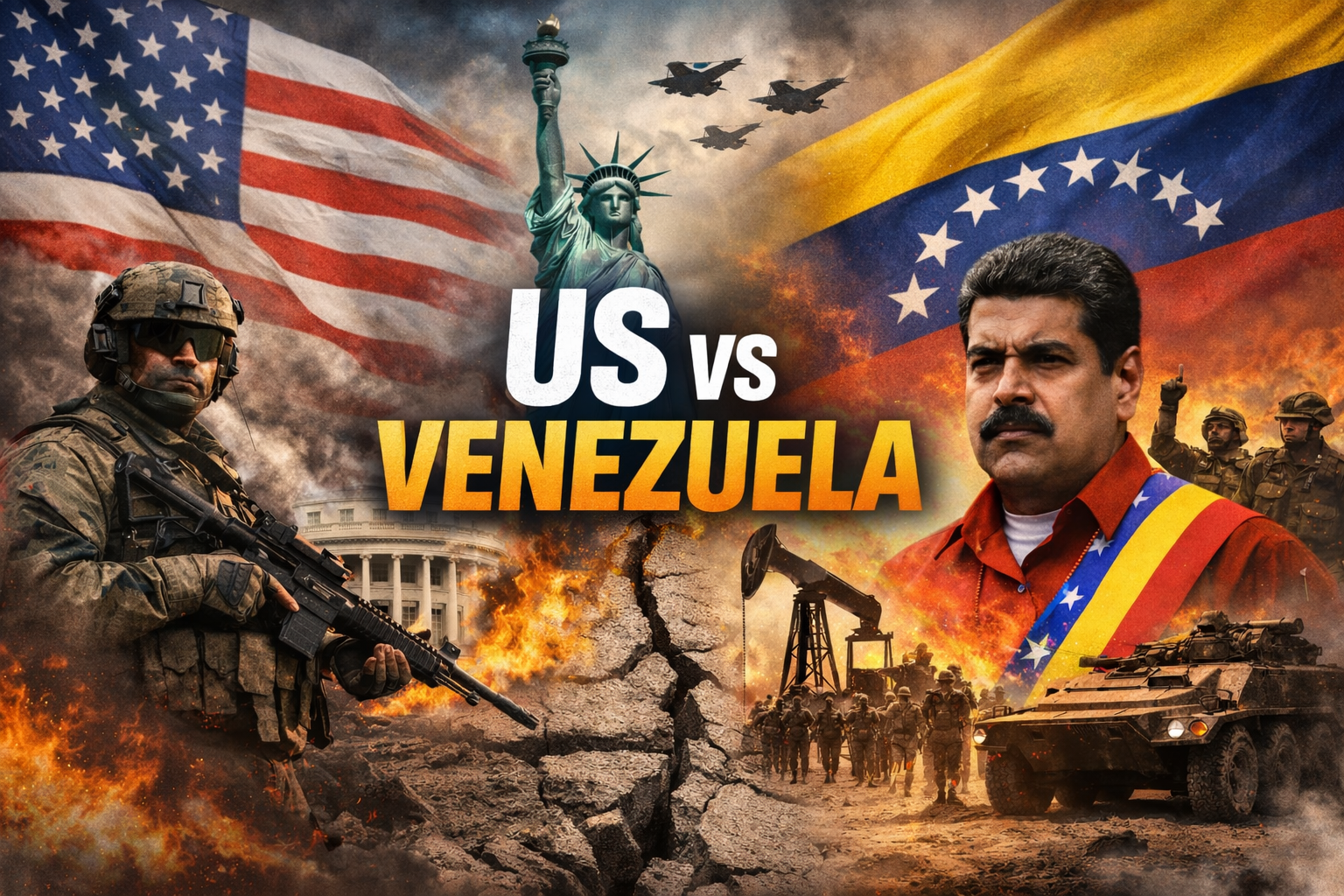
The US vs Venezuela conflict is not a sudden clash—it is the result of decades of political tension, economic pressure, ideological differences, and global power struggles. What began as diplomatic disagreement slowly evolved into sanctions, oil politics, and international controversy that continues to affect millions of people today.
To truly understand US vs Venezuela, we need to go beyond headlines and break the issue down in a clear, human way—looking at history, leadership, oil economics, sanctions, and the real-world impact on ordinary citizens.
Understanding the US vs Venezuela Conflict: A Quick Overview
At its core, the US vs Venezuela conflict revolves around three main issues:
- Political ideology (Socialism vs Capitalism)
- Control over Venezuela’s massive oil reserves
- Human rights and democracy concerns
The United States accuses Venezuela’s government of authoritarianism, corruption, and election manipulation. Venezuela, on the other hand, claims the US is trying to control its resources and overthrow its leadership.
A Brief History of US vs Venezuela Relations
Early Relations: Cooperation, Not Conflict
Before the late 1990s, the US and Venezuela had relatively stable relations. Venezuela was one of America’s top oil suppliers, and trade flowed smoothly.
Everything changed in 1999, when Hugo Chávez became president.
Hugo Chávez and the Turning Point
Hugo Chávez introduced a socialist revolution, nationalizing industries and openly criticizing US foreign policy. He aligned Venezuela with countries like:
- Cuba
- Russia
- Iran
- China
This ideological shift marked the real beginning of the US vs Venezuela confrontation.
Chávez accused the US of imperialism. The US accused Chávez of undermining democracy.
Nicolás Maduro and Escalation of the Conflict
After Chávez’s death in 2013, Nicolás Maduro took power. Under Maduro:
- Venezuela’s economy collapsed
- Inflation reached record highs
- Food and medicine shortages became widespread
The US blamed Maduro’s policies. Maduro blamed US interference and sanctions.
This blame game intensified the US vs Venezuela standoff.
US Sanctions on Venezuela: Pressure or Punishment?
Why Did the US Impose Sanctions?
The United States imposed sanctions to:
- Pressure Maduro to step down
- Restore democratic elections
- Address human rights violations
Sanctions targeted:
- Venezuela’s oil industry
- Government officials
- State-owned companies
The Oil Factor in US vs Venezuela
Venezuela has the largest proven oil reserves in the world—even more than Saudi Arabia.
Oil is the heart of the US vs Venezuela conflict.
When sanctions restricted oil exports:
- Government revenue collapsed
- Public services failed
- Poverty increased
Critics argue sanctions hurt civilians more than leaders.
The Human Cost of the Conflict
Life for Ordinary Venezuelans
Due to economic collapse and sanctions:
- Millions left the country
- Hospitals lack basic supplies
- Food insecurity increased
Over 7 million Venezuelans have migrated, creating one of the world’s largest refugee crises.
This humanitarian angle makes the US vs Venezuela conflict deeply controversial.
Juan Guaidó and the Political Standoff
In 2019, the US recognized Juan Guaidó as Venezuela’s interim president, calling Maduro’s election illegitimate.
This move:
- Escalated tensions
- Divided international opinion
- Failed to remove Maduro
Maduro retained control of the military and state institutions.
International Players in the US vs Venezuela Conflict
Russia and China’s Role
Russia and China support Venezuela by:
- Providing loans
- Buying oil
- Blocking US-backed resolutions
For them, Venezuela is both a strategic ally and an economic investment.
Latin America’s Mixed Response
Some countries back US pressure. Others oppose foreign intervention, fearing instability.
This division highlights how US vs Venezuela is not just a bilateral issue—it’s global.
Is the Conflict Really About Democracy?
The US frames the conflict as a fight for democracy and human rights.
Venezuela argues:
- The US supports regimes when convenient
- Oil interests outweigh moral concerns
This debate makes US vs Venezuela a textbook example of modern geopolitical hypocrisy, according to critics.
Recent Developments: Is There a Shift?
In recent years:
- The US softened some oil sanctions
- Talks between Washington and Caracas resumed
- Global energy shortages changed priorities
With rising oil prices, Venezuela’s oil suddenly became valuable again.
This shows how economic reality often reshapes political ideology in the US vs Venezuela conflict.
Case Study: Sanctions vs Regime Change
Despite years of sanctions:
- Maduro remains in power
- Living conditions worsened
- Opposition weakened
Experts increasingly question whether sanctions achieve their goals or backfire.
Expert Opinions on US vs Venezuela
What Analysts Say
Many foreign policy experts believe:
- Sanctions alone rarely topple governments
- Dialogue may be more effective
- Humanitarian exemptions must expand
The consensus? The US vs Venezuela conflict needs a new strategy.
Could the Conflict Be Resolved?
Possible Solutions
- Gradual lifting of sanctions
- Internationally supervised elections
- Economic rebuilding assistance
- Diplomatic engagement
Trust remains low on both sides, making resolution difficult but not impossible.
Why US vs Venezuela Matters to the World
This conflict impacts:
- Global oil markets
- Refugee flows
- US–Russia rivalry
- Latin American stability
It is not just a regional dispute—it’s a global signal of how power, resources, and ideology collide.
Final Thoughts: The Real Meaning of US vs Venezuela
The US vs Venezuela conflict is not black and white. It is a layered story of power, pride, policy mistakes, and human suffering.
Sanctions were meant to bring change but deepened hardship. Leadership failures worsened crisis. Ordinary people paid the price.
If the future holds any hope, it lies not in pressure alone, but in dialogue, realism, and compassion.
Understanding US vs Venezuela means understanding how global politics affects real lives—and why smarter solutions are urgently needed.
2 thoughts on “US vs Venezuela: A Deep Dive Into One of the Most Complex Geopolitical Conflicts”